Pantry Cabinets: Sizes, Layouts and Organizer Ideas
Last Modified October 28, 2026
Pantry cabinets bring your food, small appliances and supplies together in one easy-to-reach spot. This guide covers standard pantry cabinet sizes, five layouts for different kitchens, nine organizer ideas and how to measure, so you can choose a pantry cabinet that fits your space.
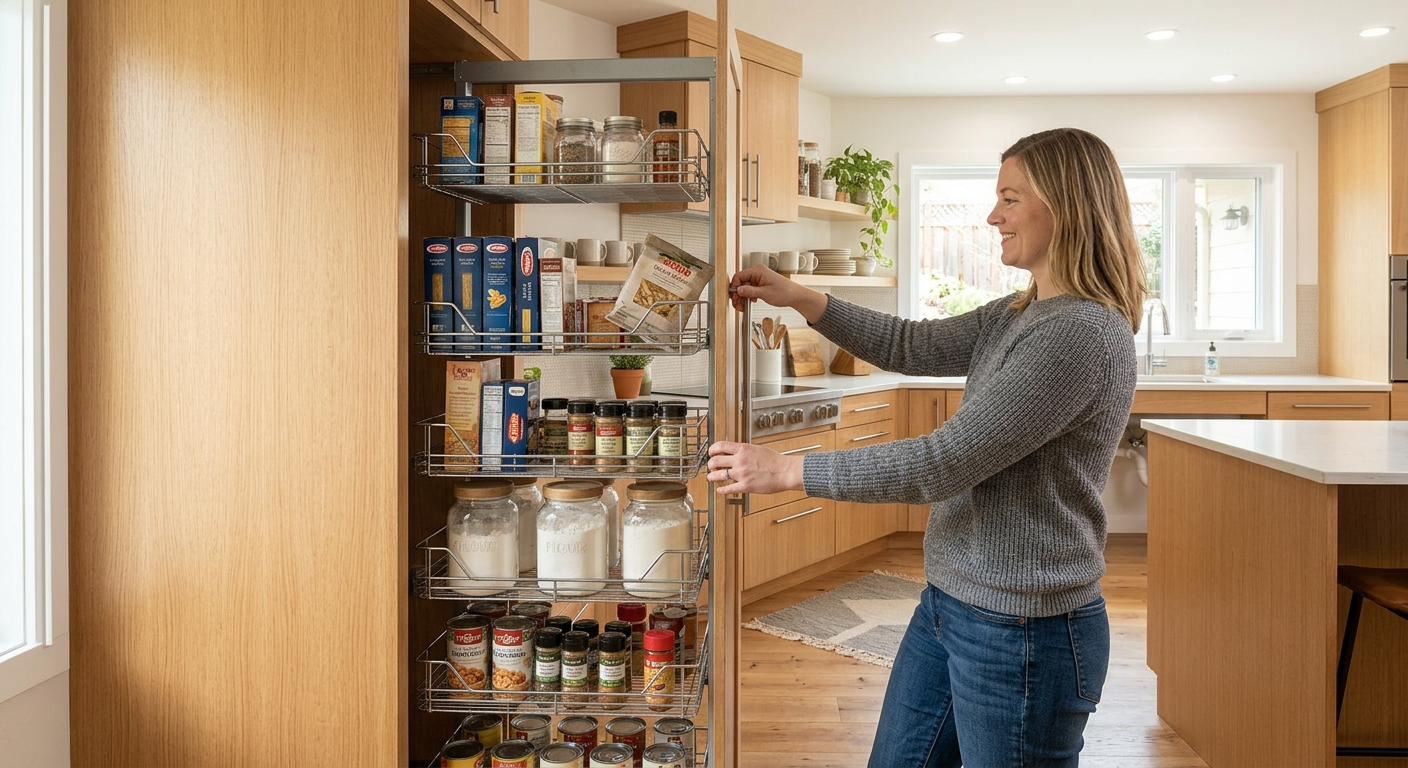
Pantry cabinets keep dry goods, small appliances, cookware and cleaning supplies in one place, so everyday kitchen storage is easier to manage. The best pantry cabinet isn’t always the tallest or widest. It’s the one that fits your floor space, door clearance, storage needs and cabinet collection. Below, you’ll find common pantry cabinet sizes, practical layouts and nine organizer ideas to help you plan your kitchen with Waverly Cabinets.
Standard Pantry Cabinet Sizes
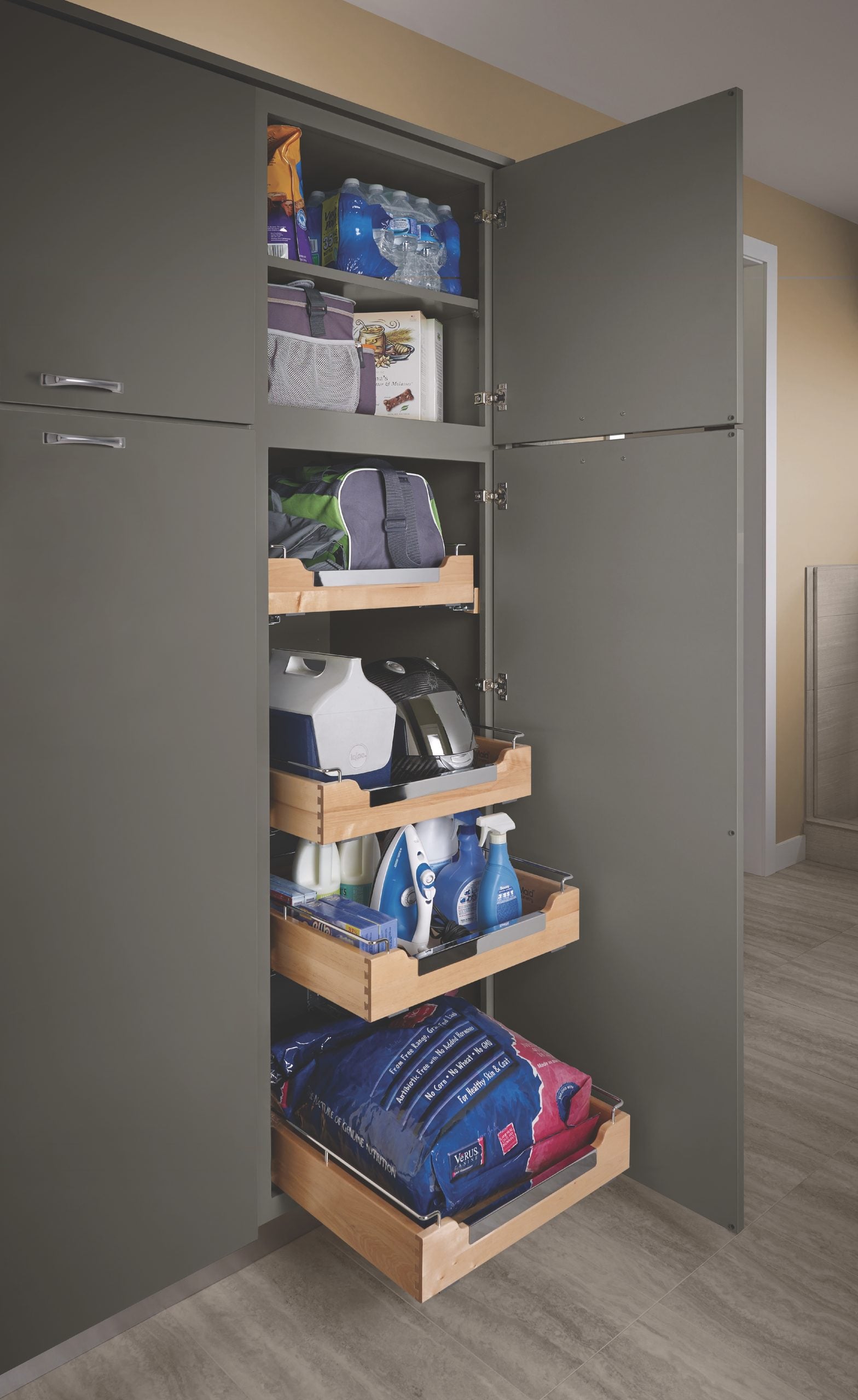
Standard tall pantry cabinets come in three common heights: 84, 90 and 96 inches. Depths are usually 12 or 24 inches, and widths are typically 18, 24, 30 or 36 inches. Not every brand offers every size combination, so treat these as general planning dimensions rather than exact specs for Waverly Cabinets brands. Before you order, check the cabinet SKU and the manufacturer’s specification sheet.
| Dimension | Common planning sizes | What to verify |
|---|---|---|
| Height | 84″, 90″, 96″ | Ceiling height, crown molding, installation clearance |
| Width | 18″, 24″, 30″, 36″ | Available SKU widths and adjacent appliance or doorway clearance |
| Depth | 12″ or 24″ | Door swing, walkway clearance, and shelf accessibility |
| Configuration | Single-door, double-door, or drawer-and-door designs | Exact door arrangement, shelf count, and included hardware |
Pantry cabinet depth changes how easy your items are to reach. A shallow 12-inch pantry works well for everyday food because nothing gets lost behind other items. A deeper 24-inch pantry fits small appliances and bulk supplies, but pull-out shelves or drawers are what keep everything easy to reach. Also note that some tall pantry cabinets have fixed compartments or only a few adjustable shelves, so check the interior drawing before you assume every shelf can be moved.
Choosing the Right Layout for Pantry Cabinets
Where you put your pantry cabinets matters as much as their size. The right layout depends on your kitchen’s shape, the space you have and how you move around while you cook. Here are five common pantry cabinet layouts and when each one works best.
1. Single Tall Pantry Cabinet
A single tall pantry cabinet suits smaller kitchens and works well in a narrow gap next to the refrigerator. It brings your food storage together without needing a separate pantry room. Before you order, measure the width carefully and leave room for handles and a door that opens all the way.
2. Double Pantry Cabinets
Two tall pantry cabinets side by side give you a larger storage zone. One can hold groceries while the other stores serving pieces, countertop appliances or household supplies. Make sure the tall doors can open without hitting nearby walls or appliances.
3. Pantry Cabinet Beside the Refrigerator
A pantry cabinet next to the refrigerator puts your food storage right beside your prep area. Plan around the refrigerator first: its door swing, filler panels, ventilation clearance and the manufacturer’s installation instructions all come before a perfectly symmetrical layout.
4. Pantry Cabinets for L-Shaped and Galley Kitchens
In an L-shaped kitchen, the end of a cabinet run is often a good spot for a tall pantry. In a galley kitchen, check that an open pantry door won’t block the aisle. Either way, the best spot keeps food close to your prep counters and out of the main walkway.
5. Base Cabinet Pantry Alternative
If a full-height pantry would crowd your kitchen, deep drawers or a base cabinet with pull-out trays keep food easy to reach. A mix of wall and base cabinets can also work better around windows, sloped ceilings or in kitchens where you want an open fee
9 Pantry Cabinet Organizer Ideas
A well-organized pantry cabinet saves time, cuts food waste and makes it easy to see what you have. You don’t need a big pantry to get there. You need the right organizers for the space. These nine pantry cabinet organizer ideas work in single and double pantries, deep and shallow units, and base cabinet pantries.
1. Use adjustable shelves strategically
Group items by height and leave enough room for cereal boxes, bottles and small appliances. Check which shelves are actually adjustable in the cabinet you choose.
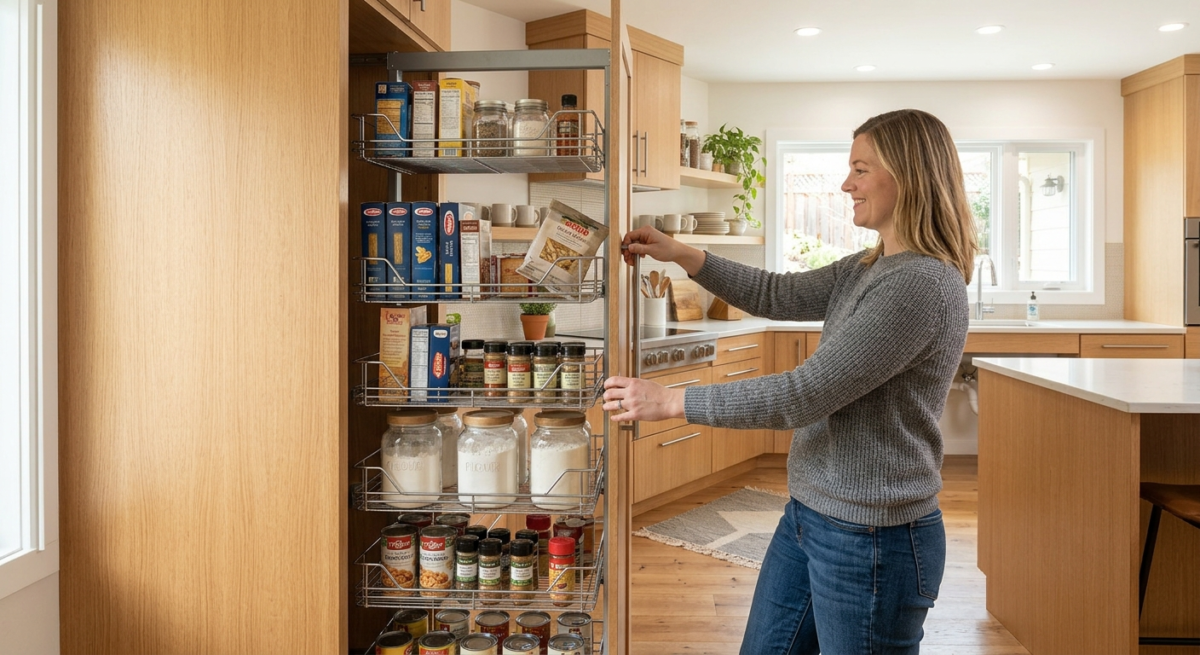
2. Add pull-out trays to deep cabinets
Pull-out trays bring items from the back of a deep pantry cabinet into view. Before you buy, check the cabinet’s inside width, hinge clearance and the tray’s weight rating.
3. Store dry goods in clear containers
Matching clear containers cut down on packaging clutter and show how much you have left. Label each one with what’s inside and the date.
4. Install door-mounted racks
Slim door racks are great for spices and packets, but they need to clear the shelves and hinges when the door closes. Confirm the door can handle the weight and the rack fits your cabinet.
5. Create dedicated zones
Keep breakfast items in one area, baking supplies in another and snacks within easy reach. Zones make cooking and restocking faster.
6. Keep heavy items on lower shelves
Store bulk bags, drinks and heavy appliances down low to make lifting easier and lower the risk of tipping. Stay within the weight limits for your shelves and hardware.
7. Use baskets for small packages
Baskets keep packets and pouches from getting lost behind larger boxes. Choose sizes that slide out without scraping the sides of the cabinet.
8. Add lighting to deep pantries
Battery-powered or properly installed low-voltage lights make it easier to see inside a deep pantry cabinet. Don’t block ventilation or run unsafe wiring through the cabinet.
9. Set up a simple inventory system
Keep the items you use most at eye level, move older food to the front and check your pantry regularly so nothing goes to waste.
Choosing Organizers that fit
The best pantry cabinets pair a smart layout with organizers sized to the cabinet’s actual interior. Most organizers aren’t included with the cabinet, so treat baskets, pull-outs and door racks as optional add-ons unless the product listing says they’re included.
How to Measure for Pantry Cabinets
Accurate measurements are the key to pantry cabinets that fit the first time. Measure the finished room, not just an early floor plan, since walls, floors and ceilings are rarely perfectly square or level. Note anything that could get in the way, including baseboards, trim, outlets, switches and windows. Then follow these six steps.
- Measure the width. Measure the opening at the floor, middle and top of the wall. Use the smallest number.
- Measure the height. Measure floor to ceiling in more than one spot. Leave room for assembly, leveling, trim and any installation clearance the manufacturer requires.
- Confirm the depth. Factor in cabinet doors, handles, nearby countertops and enough room to walk past comfortably.
- Test the door swing. Make sure the pantry door can open fully without hitting refrigerator doors, walls, islands or nearby cabinets.
- Check the floors and walls. Look for uneven floors and find solid spots on the wall to anchor the cabinet.
- Plan the delivery path. Make sure boxed or assembled cabinets can fit through your hallways and doorways.
Before you finalize your order, visit the Waverly Cabinets Help Center for more planning tips, and ask our team for measurements specific to the product you’re ordering.
What to Check Before Ordering
When shopping for pantry cabinets, compare more than the outside dimensions. A cabinet that appears to fit on paper may not work if its doors open the wrong way or if a pull-out accessory interferes with the hinges. Use this quick checklist before checkout.
| Check | Why it matters |
|---|---|
| Exact SKU dimensions | Width, height, and depth can vary by brand and style. |
| Interior configuration | Shelf positions, fixed dividers, and door arrangement affect usable storage. |
| Finish and door style | A matching collection creates a consistent look with nearby cabinets. |
| Hardware and accessories | Pull-outs, organizers, and soft-close features may be optional or collection-specific. |
| Delivery and installation | Confirm shipment format, inspection requirements, and secure wall anchoring. |
| Final price | Include fillers, trim, accessories, shipping, and installation where applicable. |
Browse available cabinet collections at Waverly Cabinets and use the 10×10 Kitchen Cost Estimator for broader cabinet budgeting. A standard 10×10 example may not include the tall pantry cabinet or accessories you want, so request an itemized quote for your actual layout. For general kitchen planning education, the National Kitchen & Bath Association provides industry resources.
Frequently Asked Questions
What is the standard height of a pantry cabinet?
Common tall pantry heights include 84, 90, and 96 inches, but the available sizes depend on the manufacturer and collection.
How deep should pantry cabinets be?
12-inch and 24-inch depths are common planning options. Shallower storage improves visibility, while deeper storage can hold bulk items when properly organized.
Are pantry cabinets available in 18-inch widths?
Many cabinet lines offer narrow tall units, including 18-inch widths, but availability must be confirmed for the exact brand and door style.
Are pull-out organizers included with pantry cabinets?
Not always. Organizers, roll-out trays, and door racks may be optional accessories. Check the product listing and included-parts information.
Can I put a pantry cabinet next to a refrigerator?
Often yes, provided refrigerator ventilation, door swing, fillers, and manufacturer clearances are accommodated.
Do pantry cabinets need to be secured to the wall?
Tall cabinets generally require appropriate anchoring according to the manufacturer’s installation instructions and site conditions. Consult a qualified installer when needed.
How do I choose a pantry cabinet for a small kitchen?
Start with the available footprint and traffic clearances. A narrow tall pantry or pull-out storage in base cabinets may be more practical than a large deep unit.
Plan Your Pantry Storage with Waverly Cabinets
Well-planned pantry cabinets make kitchen storage more efficient without sacrificing the layout. Start with accurate measurements, compare the interior configurations available in your preferred cabinet line, and choose organizers that fit the actual unit. Explore Waverly Cabinets or contact the team for help reviewing options and planning an order.
Table of Contents
LATEST POSTS
- Pantry Cabinets: Sizes, Layouts and Organizer Ideas

- The Best Countertops for Green Kitchen Cabinets (6 Pairings That Work)

- Green Kitchen Cabinets: 4 Real Shades, Real Prices (No Showroom Guesswork)
- The Kitchen Grease Battle: Is a Waterborne UV Finish Your Secret Weapon?
Newest Door Style
-
 Forevermark
Cullian Champagne
Shop Now10'x10' Kitchen Starting at
$10,937.00$4,374.80Only $3,499.84 with
fall20 -
US Cabinet Depot
Edgeline Ridge
Shop Now10'x10' Kitchen Starting at
$8,144.00$4,479.20Only $3,583.36 with
fall20