
The Best Countertops for Green Kitchen Cabinets (6 Pairings That Work)
Short answer: Green kitchen cabinets pair best with countertops that either contrast cleanly (white quartz, honed black) or lean into the same warm, organic register (butcher block, travertine, soapstone) — the pairings that fail have too many competing patterns or a cool gray undertone that fights green’s warmth. Below are six combinations that work, matched to […]
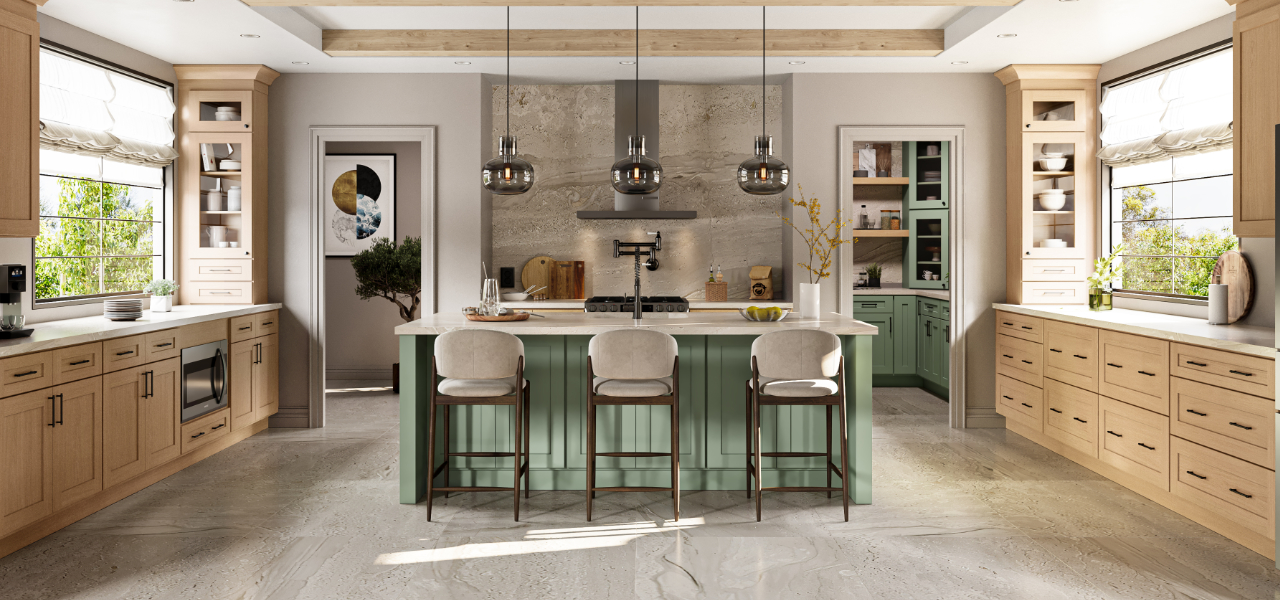
Short answer: Green kitchen cabinets pair best with countertops that either contrast cleanly (white quartz, honed black) or lean into the same warm, organic register (butcher block, travertine, soapstone) — the pairings that fail have too many competing patterns or a cool gray undertone that fights green’s warmth. Below are six combinations that work, matched to the shade of green they suit best.
Green has moved from accent color to full cabinet commitment, but a lot of the disappointment homeowners run into isn’t with the cabinet color itself — it’s with the countertop chosen to go with it. Green is a warmer, more saturated color than the whites and grays kitchens have leaned on for a decade, and not every countertop material was designed with that in mind. Some pairings read as intentional and collected. Others read as two separate design decisions that never talked to each other. Here’s what actually works, and why.
What color countertops go best with green cabinets?
Rule #1 for matching countertops: find out if your green kitchen cabinets are a warm color or cool color.
The simplest method is to compare it against a pure primary color. Hold the swatch next to a pure bright red, bright blue, and pure white. If the color suddenly looks yellowish, brownish, or golden, it is warm. If it looks bluish, purplish, or crisp icy gray, it is cool.
1. White Quartz + Soft Green Kitchen Cabinets
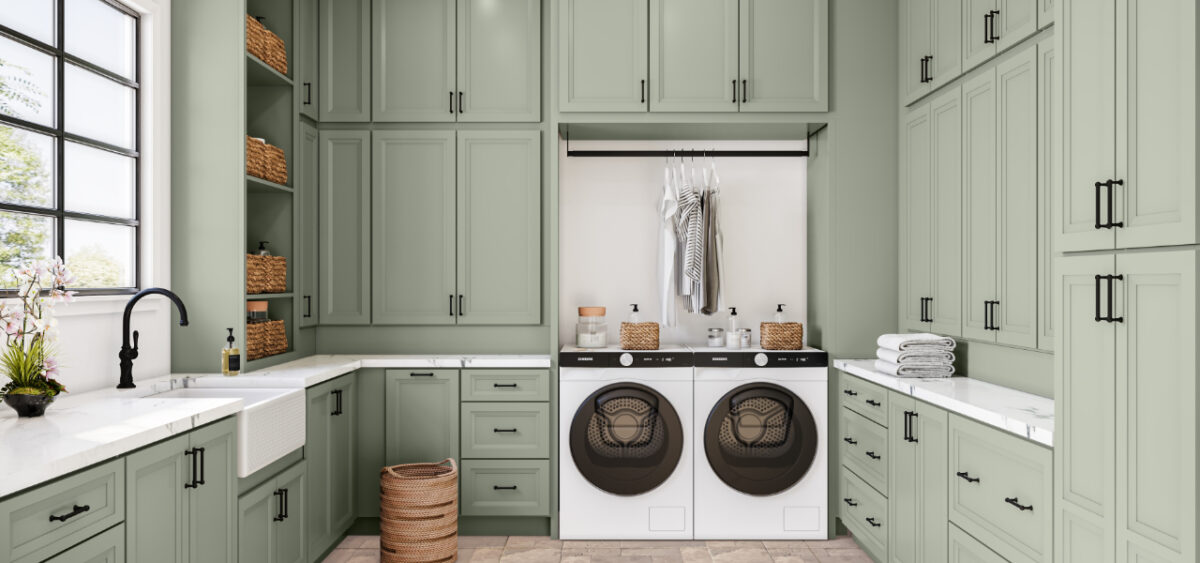
White quartz is the safest, most versatile pairing for green cabinets of any shade, from a soft sage to a deep forest. Its clean, uniform surface gives the eye a visual break from the cabinet color, which keeps a fully green kitchen from feeling like one solid block of saturated color. It’s also low-maintenance — no sealing, minimal staining — which matters in a kitchen that’s already making one bold decision with its cabinetry. The tradeoff: because quartz is engineered rather than quarried, it can look slightly flat next to a highly natural, organic cabinet finish. If you want texture as well as contrast, pair white quartz with a textured tile backsplash to add some visual interest back in.
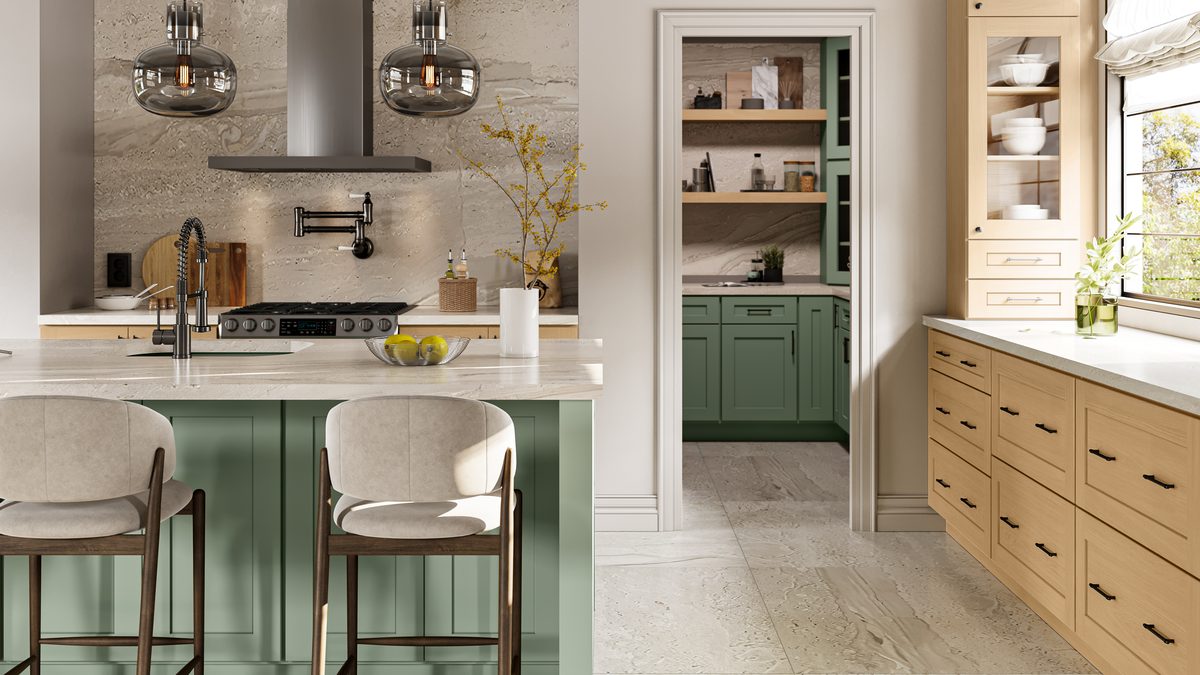
Above, we see Hazel Shaker by Blackwood Cabinets. It’s a cool
2. Butcher Block + Green Kitchen Cabinets
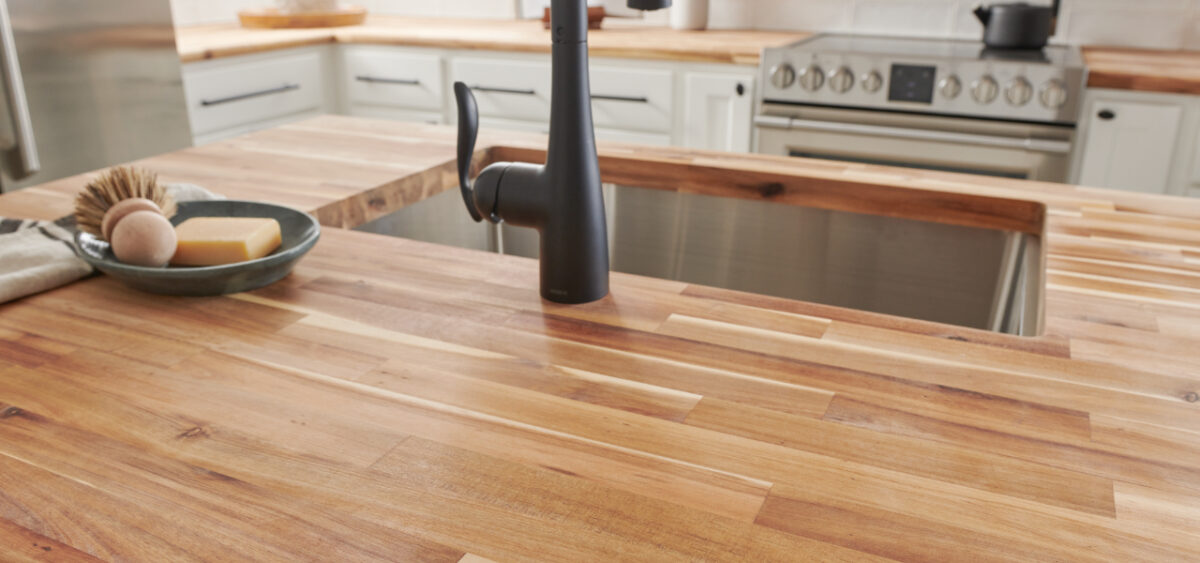
Butcher block countertops warm up a green kitchen instead of contrasting it, which makes this the pairing to reach for if your green leans cool or your kitchen otherwise feels a little sterile. Wood grain echoes the organic, natural association green already carries, so the two materials read as part of the same story rather than competing statements. It works especially well on a kitchen island, where a change in countertop material also signals a change in function — prep space versus display space. The catch is maintenance: butcher block needs periodic oiling and isn’t the best choice directly around a sink unless it’s been properly sealed.
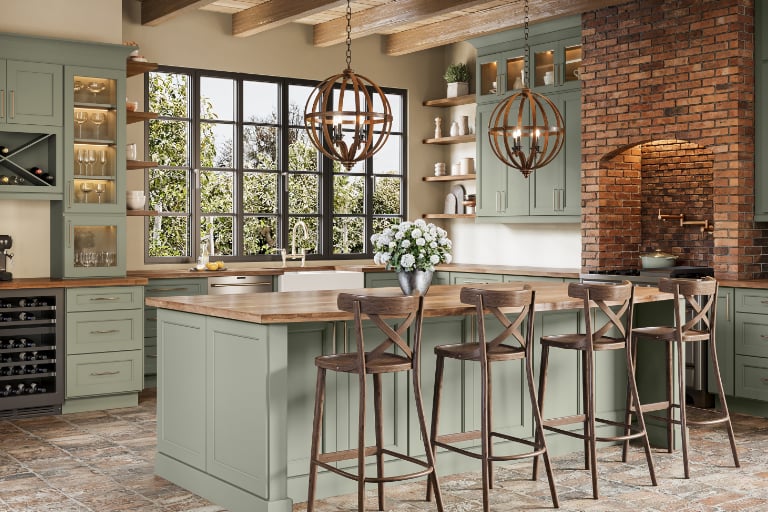
3. Honed Black + Green Kitchen Cabinets
Honed (matte, not polished) black countertops are the strongest choice for grounding a lighter sage or seafoam green — the kind of green that can otherwise read as pastel or washed out. Black absorbs light rather than reflecting it, so it anchors the kitchen visually and keeps a pale green from floating without enough contrast to feel deliberate. This pairing skews more dramatic and modern, so it suits kitchens that want to lead with color rather than play it safe. Honed finishes also hide fingerprints and water spots better than polished black stone, which is worth knowing before choosing between the two.
4. Veined Marble (or Marble-Look Quartz) + Green Kitchen Cabinets
Veined marble adds movement to a green kitchen without competing with the cabinet color itself, because the veining reads as texture rather than a second color statement. This is the pairing for a kitchen that wants to feel elevated or traditional rather than minimal — think a deep hunter or olive green cabinet with a dramatic, veined white countertop. Real marble is porous and needs sealing and some maintenance discipline; a marble-look quartz gets a similar visual effect with less upkeep, which is worth considering if the kitchen sees heavy daily use.
5. Soapstone + Green Kitchen Cabinets
Soapstone is the pairing for a deep, moody green — hunter, forest, or near-black olive — because its own natural darkening over time and matte, soft-touch surface match that same understated, old-world feel. Unlike quartz or marble, soapstone develops a patina with use, which some homeowners love as character and others find high-maintenance. It’s worth choosing deliberately rather than defaulting into, but for the right deep green cabinet, it’s one of the most cohesive pairings on this list — the two materials feel like they were chosen together rather than one covering for the other.
6. Travertine or Limestone + Green Kitchen Cabinets
Travertine and limestone bring warmth and texture the way butcher block does, but in stone rather than wood, which makes them a strong choice for an olive or sage green kitchen going for a European farmhouse or Mediterranean feel. Both materials have visible natural texture and warm, sandy undertones that soften green’s saturation instead of contrasting it outright. They’re porous like marble and need sealing, and they show wear more visibly than quartz, so they suit a kitchen where a lived-in, evolving look is the goal rather than a flaw to avoid.
How to choose between them
The fastest way to narrow this list is to start with your green, not your countertop. Lighter sage and seafoam tones generally need a countertop with either strong contrast (honed black) or enough visual weight to keep them from feeling washed out (veined marble). Deep, saturated greens — hunter, forest, olive — have more room to pair with warm, textured materials like butcher block, soapstone, or travertine without the kitchen feeling too heavy overall. White quartz is the one pairing that works reliably across the whole green spectrum, which is why it’s worth defaulting to if you’re not sure yet.
As with any finish decision, color renders differently on every screen and under every kitchen’s specific lighting. If you’re deciding between a couple of these pairings, ordering a sample door in your shortlisted green and holding it against a small sample of the countertop material you’re considering — in your own kitchen’s morning and evening light — will tell you more in five minutes than any photo can.
LATESTS POSTS
- The Best Countertops for Green Kitchen Cabinets (6 Pairings That Work)

- Green Kitchen Cabinets: 4 Real Shades, Real Prices (No Showroom Guesswork)
- The Kitchen Grease Battle: Is a Waterborne UV Finish Your Secret Weapon?
- The Ultimate Checklist for Buying RTA Cabinets Online—with Confidence

Newest Door Style
-

-
Blackwood
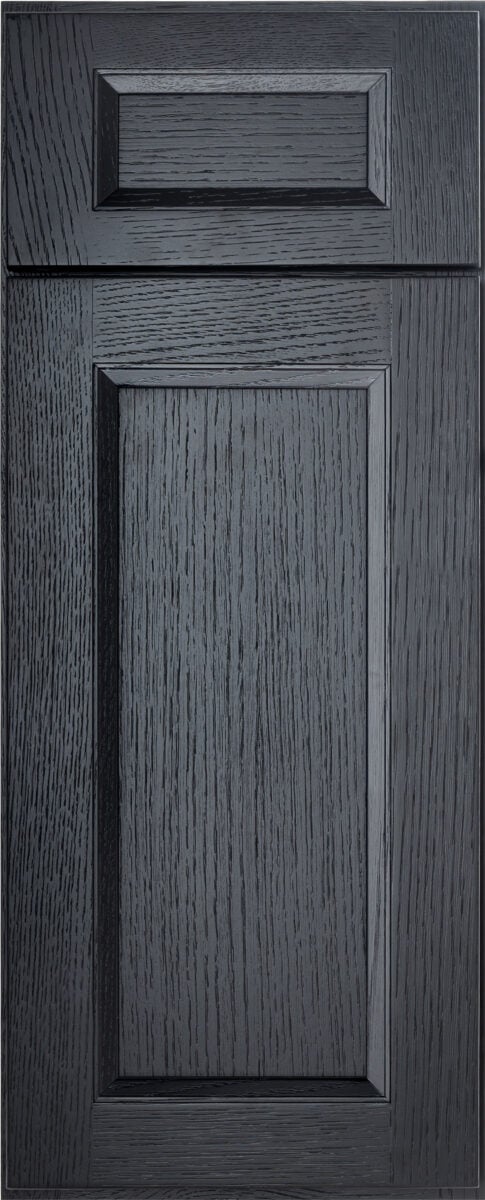
Obsidian Oak
Shop Now10'x10' Kitchen Starting at
$9,319.00$4,659.50Only $3,727.60 with
fall20
SOCIAL LINKS
Frequently Asked Questions
What’s the best countertop for green kitchen cabinets?
There’s no single best option — it depends on the shade of green. White quartz works reliably across the whole spectrum, honed black grounds a lighter sage, and warm materials like butcher block or soapstone suit deep, saturated greens like hunter or forest.
Do white countertops go with green cabinets?
Yes — white quartz is one of the most versatile pairings for green cabinets of any shade. Its clean, uniform surface gives the eye a break from the cabinet color, which keeps a fully green kitchen from feeling like one solid block of color.
What countertop pairs best with dark green cabinets?
Deep, saturated greens like hunter, forest, or olive pair well with warm, textured materials — butcher block, soapstone, or travertine — that lean into green’s organic feel rather than contrasting it. Soapstone in particular suits a moody, near-black olive cabinet.
What countertop works with light sage green cabinets?
Lighter sage and seafoam tones need either strong contrast or enough visual weight to avoid looking washed out. Honed black grounds the color, while veined marble adds movement and weight without introducing a second competing color.
Is quartz or marble better with green cabinets?
Quartz is lower-maintenance and more consistent in appearance, making it a safer choice for daily use. Marble (or marble-look quartz) adds more visual movement through its veining, which suits a more traditional or elevated kitchen but requires more upkeep if it’s real stone.
What’s the most low-maintenance countertop to pair with green cabinets?
White quartz and marble-look quartz require no sealing and resist staining, making them the lowest-maintenance options on this list. Butcher block, soapstone, marble, and travertine are all more natural materials that need periodic sealing, oiling, or accept a developing patina over time.