
Framed Cabinets vs. Frameless Cabinets: Which Is Right for Your Kitchen?
Last Modified July 28, 2026
Framed vs. frameless cabinets: compare storage space, cost, sturdiness, and installation to find the right fit for your kitchen renovation.
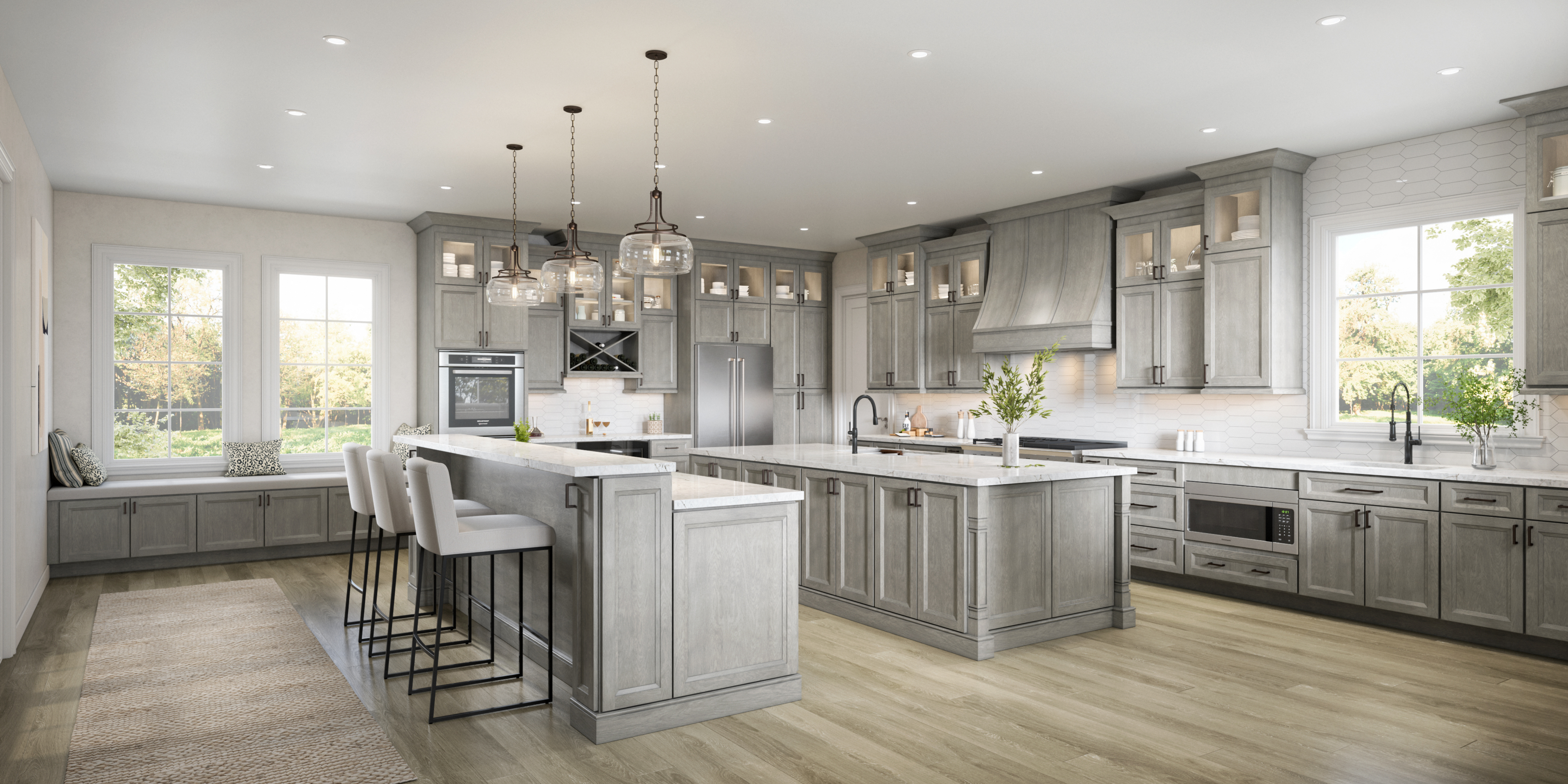
Framed cabinets have a visible face frame attached to the front of the cabinet box, while frameless cabinets remove that frame entirely for a cleaner look and more interior space. It’s a small construction detail, but it affects everything from storage capacity to hinge style to installation difficulty.
When someone decides to replace their cabinets, they quickly realize there’s more to the decision than meets the eye. Between functionality, construction, and aesthetics, it’s hard to know what matters most, and most people overlook the framed-versus-frameless question entirely because it seems trivial at first glance.
That tiny detail makes a bigger impact than you’d expect. Here’s a hint: it’s not the doors.
Framed Cabinets
While most people are unfamiliar with the name, everyone will recognize the distinct appearance of these cabinets. This style features a visible frame attached to the front of the cabinet box. The face frame, composed of horizontal rails and vertical stiles, reinforces the cabinet’s structural integrity, lending a measure of durability and sturdiness.

Most American homes, at one point, had framed cabinets. It was common enough that some regard it as a design choice along side “European style” cabinets.
Advantages
There are some advantages to framed cabinetry. This popular style makes it easy to find design inspiration. However, here are some other perks:
Reliable Hardware Mounting
The face frame is securely attached to the cabinet box. It provides a stable, reliable surface to attach hardware such as decorative hinges and LED lights. Here’s an example:
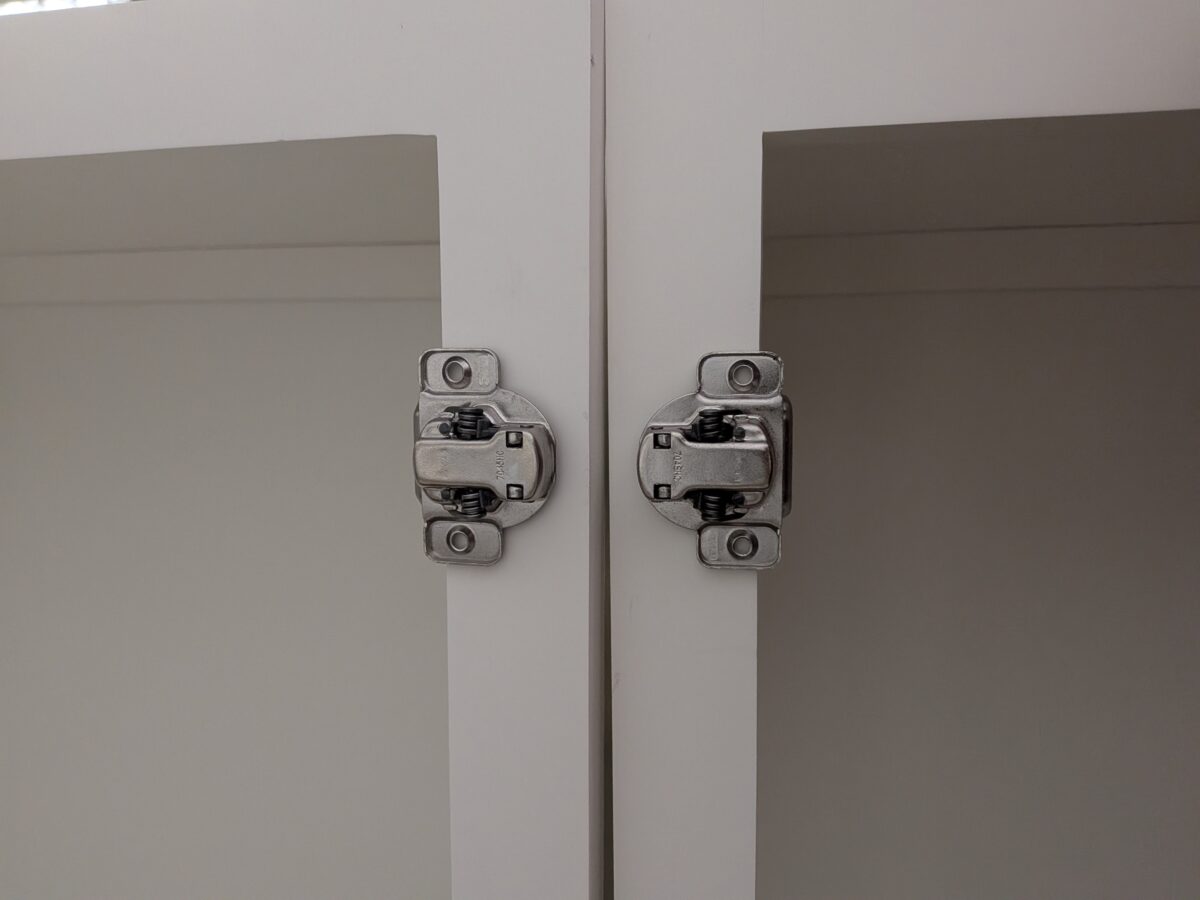
The face frame is securely attached to the cabinet box. It provides a stable, reliable surface to attach hardware such as decorative hinges and LED lights. Here’s an example:
Adjustable Shelving
Most of these cabinets will come with adjustable shelving. It provides a greater capacity to customize your organization system as you install your cabinets.
Extensive Customization Possibilities
The extra space provided by the frame gives you more space to work with. Unlike frameless cabinets, you have the option of installing ornate hinges and edge detailing. Another beautiful feature is door overlays.
There are three main overlay options for a framed cabinet: inset, partial overlay or full overlay. The face frame is clearly visible with inset and partial overlay doors. The horizontal rails and vertical stiles become part of the cabinet’s appeal.
An inset door fully exposes the frame by setting the cabinet door flush with the edge of the face frame. On the other hand, a partial overlay door brings that cabinet door forward to rest against the face frame without hiding it. A full overlay hides the face frame completely.
Potential Drawbacks
There are two drawbacks to a framed cabinet that we should talk about:
Limited Interior Access
The face frame can slightly obstruct access to the cabinet interior, particularly in taller or deeper cabinets. If you like overstocking your cabinets or struggle to reach shelves, this could be a serious drawback.
Reduced Interior Space
The presence of the face frame and center stile (on larger cabinets) can diminish the overall interior cabinet space.
Frameless Cabinets
Unless you watch HGTV or follow us online, you probably didn’t know that these are called “European style” cabinets. The construction method removes the front frame and center stile. It gives greater access to the interior and larger storage capacity. The full overlay doors provide a clean, continuous line across your cabinetry.

The front frame we see in the previous section is missing. We’re left with the cabinet box, and then the doors. As a result, most frameless cabinets are full overlay.
Advantages
I highly recommend that you look through the frameless cabinets from US Cabinet Depot. The style is stunning and gives several nice perks. Here are some advantages of frameless cabinets:
Effortless Access
The lack of a face frame ensures unobstructed access to the cabinet interior, making it easier to retrieve and organize items. This is especially useful for anyone that over stuffs their cabinets.
More Storage Options
With no center stile dividing larger cabinets, frameless designs offer a continuous, uninterrupted storage area, ideal for storing oversized items.
Versatile Design Options
Frameless cabinets seamlessly integrate into both contemporary and traditional designs. These cabinets offer a large, blank surface to unleash your creativity.
Potential Drawbacks
There are several downsides to these. I highly recommend paying attention to these:
Precision Installation
These cabinets must be installed with meticulous precision. It prevents warping or binding of doors and drawers. The clean lines are beautiful, but every misalignment is noticeable.
Full Overlay and Concealed Hinges Only
These cabinets come with full overlay door styles only. Partial overlay and inset options are not compatible with this construction method. Furthermore, only concealed hinges work with these cabinets.
Less Sturdy
The face frame does provide stability to the cabinet. Without that added support, frameless cabinets are more prone to racking. As a result, you need to adjust the hinges more often.
Making Your Choice
With a comprehensive understanding of the distinctions between framed and frameless, it’s time to evaluate which option aligns best with your specific requirements and design aspirations. Here are some key factors to consider:
Design Aesthetic
If you gravitate towards a more traditional or transitional designs, these cabinets may be the natural choice. It gives you greater creativity options and blends well with your preferences.
On the other hand, the frameless provides clean lines and a smooth finish for modern or contemporary styles.
Space Optimization and Storage Needs
If maximizing interior cabinet space is a priority, particularly in compact kitchens, frameless may be the optimal choice. Without the frame, you have unobstructed access to the cabinet interior. It won’t provide significantly more space, but enough for those that store oversized items.
Installation Considerations
If your kitchen has uneven walls or floors, these cabinets may be easier to install and align, as the face frame can help compensate for minor irregularities.
While both cabinet styles require professional installation, frameless demand a higher level of precision and expertise to ensure proper alignment and prevent potential issues.
Budget and Cost Implications
When embarking on a kitchen renovation, it’s essential to consider the cost implications of your cabinetry choices. Both framed and frameless offer varying price points, and understanding the factors that influence their costs can help you make an informed decision that aligns with your budget and long-term goals.
Due to the construction method and material, frameless can cost more than other cabinets. It may cost more to install depending on your contractor and space.
While these generally have a lower initial cost, it’s essential to consider the long-term value and potential resale benefits of your cabinetry investment. Frameless, despite their higher upfront cost, may offer increased storage efficiency, a sleek and contemporary aesthetic, and potential added value to your home, making them a worthy investment for some homeowners.
Design Considerations
There are differences between these two cabinet styles that go deeper than personal preference. Each brand has their intricate installation and design specifications for their products. For example, frameless from US Cabinet Depot have unfinished ends that need an end panel cover. These end panels are sold separately and deliberately oversized to allow for trimming.
Without knowing this detail, receiving your frameless from US Cabinet Depot could be disappointing. Make sure to read all notices given on the shopping cart page. This will help you with details like the one above.
If you’re unfamiliar with the finer details of a brand, you’ll want to consult a designer for help. We have an excellent design program available for customers. Please learn more by clicking here.
Quick Comparison
| FEATURE | FRAMED CABINETS | FRAMELESS CABINETS |
|---|---|---|
| Construction | Face frame attached to cabinet box front | No face frame; box and doors only |
| Interior Storage Space | Slightly reduced by frame and center stile | Maximized, continuous storage area |
| Interior Access | Slightly obstructed by face frame | Fully open, easier access |
| Door Overlay Options | Inset, partial overlay, or full overlay | Full overlay only |
| Hinge Compatibility | Wide range, including decorative hinges | Concealed hinges only |
| Structural Sturdiness | More rigid due to face frame support | Slightly more prone to racking over time |
| Installation | Easier to adjust for uneven walls/floors | Requires precise, expert-level installation |
| Typical Cost | Generally lower upfront cost | Generally higher upfront cost |
| Best Suited For | Traditional or transitional kitchens | Modern or contemporary kitchens |
Table of Contents
LATESTS POSTS
- The Best Countertops for Green Kitchen Cabinets (6 Pairings That Work)

- Green Kitchen Cabinets: 4 Real Shades, Real Prices (No Showroom Guesswork)
- The Kitchen Grease Battle: Is a Waterborne UV Finish Your Secret Weapon?
- The Ultimate Checklist for Buying RTA Cabinets Online—with Confidence

Newest Door Style
-

-
Blackwood
Obsidian Oak
Shop Now10'x10' Kitchen Starting at
$9,319.00$4,659.50Only $3,727.60 with
fall20
SOCIAL LINKS
Frequently Asked Questions
What is the main difference between framed and frameless cabinets?
Framed cabinets have a face frame attached to the front of the cabinet box, while frameless cabinets remove that frame entirely. This single construction difference affects storage space, door style options, and how the cabinets are installed.
Which is sturdier, framed or frameless cabinets?
Framed cabinets tend to be sturdier because the face frame reinforces the cabinet box. Frameless cabinets rely on the box construction alone, which can make them slightly more prone to racking over time.
Are frameless cabinets more expensive than framed cabinets?
Generally, yes. Frameless cabinets often cost more upfront due to their construction method and the precision required for installation, though many homeowners find the added storage space and modern look worth the investment.
Can I use any hinge style with frameless cabinets?
No. Frameless cabinets only work with concealed hinges, while framed cabinets can accommodate a wider range of hinge styles, including decorative options.
Which style offers more storage space?
Frameless cabinets generally offer more usable interior space since there’s no face frame or center stile in the way, which is especially helpful for storing larger items.
Is one style easier to install than the other?
Framed cabinets are typically more forgiving during installation, since the face frame can help compensate for uneven walls or floors. Frameless cabinets demand more precise installation to keep doors and drawers properly aligned.